When Executives Don't Believe the Numbers: Diagnosing the Analytics Trust Gap

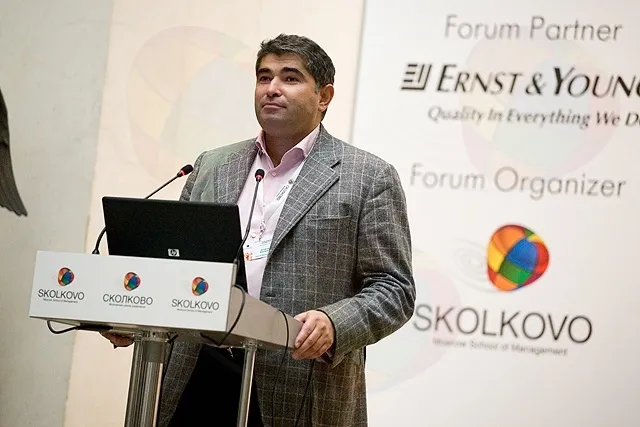
Photo: executive reviewing data dashboard in boardroom meeting skeptical, via images.stockcake.com
The Paradox at the Heart of Enterprise Intelligence
An enterprise invests significantly in a unified analytics platform. The data pipelines are clean. The dashboards are current. The insights are, by any objective measure, sound. And yet, in the boardroom, a senior vice president pushes back: "I'm not sure I trust these numbers."
This scenario plays out across American enterprises with surprising regularity. Organizations spend billions annually on business intelligence infrastructure, yet the return on that investment is frequently undermined not by technical failure but by a quieter, more stubborn problem: executive skepticism. When decision-makers doubt the insights placed in front of them, the cost is not merely a delayed report. It is delayed strategy, missed opportunity, and a competitive disadvantage that compounds over time.
This phenomenon—what might reasonably be called the analytics trust tax—is one of the most underexamined drags on enterprise performance today.
Why Skepticism Takes Root
Trust is not irrational. When executives question analytics outputs, they are often drawing on experience rather than instinct. Many senior leaders have lived through at least one high-profile analytics initiative that promised transformation and delivered confusion. A dashboard that contradicted itself. A forecast that missed badly. A unified data project that quietly collapsed under the weight of integration complexity.
These experiences leave marks. Behavioral economists refer to this as the availability heuristic—the tendency to weight recent or memorable failures more heavily than current evidence. For an executive who once made a consequential decision based on flawed data, the memory of that outcome does not simply disappear when a new platform arrives. It lingers, coloring every subsequent interaction with analytics outputs.
Confirmation bias compounds the problem. Leaders who have developed strong intuitions about their markets, customers, or operations over decades of experience will naturally scrutinize data that challenges those intuitions more aggressively than data that confirms them. This is not stubbornness—it is a deeply human cognitive pattern. But in an enterprise context, it can create a selective relationship with analytics that undermines the entire value proposition of unified intelligence.
The Lineage Problem
Beyond psychology, there is a structural issue that many analytics platforms fail to address adequately: data lineage. When an executive asks "where does this number come from?" and the honest answer involves a chain of transformations, source systems, and assumptions that no single person can fully articulate, trust erodes immediately.
Data lineage—the documented journey of a data point from its origin through every transformation to its final presentation—is not merely a governance concern. It is a trust-building mechanism. When leaders can trace a metric back to its source, verify the logic applied to it, and understand the assumptions embedded in its calculation, they are far more likely to act on it with confidence.
Many enterprise platforms treat lineage documentation as an afterthought, a compliance checkbox rather than a strategic asset. This is a costly oversight. In the absence of clear lineage, executives fill the explanatory gap with doubt. And doubt, once established, is remarkably difficult to dislodge.
The Organizational Dimension
Trust in analytics is not solely an individual psychological phenomenon. It is also shaped by organizational culture and structure. In enterprises where analytics functions sit at a distance from strategic decision-making—reporting through IT rather than directly to business leadership, for instance—insights can arrive without the contextual credibility that proximity provides.
When a CFO receives a revenue forecast generated by an analytics team they have never met, working within systems they do not understand, the social contract that normally supports trust is absent. Contrast this with an environment where analytics professionals are embedded within business units, participate in strategic planning sessions, and are known personally to the executives they serve. In the latter scenario, the same insight carries inherently greater weight.
This is not a technology problem. It is a design problem—one that requires deliberate choices about how analytics capabilities are organized, positioned, and communicated within the enterprise.
Rebuilding Confidence: A Practical Framework
Restoring executive trust in analytics outputs requires attention to multiple dimensions simultaneously. No single intervention is sufficient.
Establish a trust audit. Before investing further in platform capabilities, organizations should conduct an honest assessment of where and why skepticism exists. Which leaders are most resistant? What specific past failures are informing their hesitation? Understanding the roots of distrust is prerequisite to addressing it.
Prioritize transparent data lineage. Every significant metric presented to senior leadership should be accompanied by accessible documentation of its origin, transformation logic, and underlying assumptions. This documentation need not be exhaustive, but it must be honest and navigable. Leaders should be able to follow the trail themselves if they choose.
Create deliberate wins. Trust is rebuilt incrementally. Identifying two or three high-visibility decisions where analytics can demonstrably contribute to a successful outcome—and then ensuring those successes are visible to skeptical leaders—does more to shift attitudes than any platform demonstration.
Integrate analytics professionals into strategic conversations. Moving analytics talent closer to business leadership, whether through organizational restructuring or more frequent cross-functional engagement, helps establish the relational credibility that data alone cannot provide.
Acknowledge uncertainty explicitly. Counterintuitively, analytics outputs that communicate confidence intervals, acknowledge data limitations, and flag areas of uncertainty are often trusted more than those that present conclusions without qualification. Intellectual honesty signals rigor. Overconfidence signals risk.
The Competitive Cost of Inaction
The trust gap is not a soft problem. Its consequences are measurable. When executives hesitate to act on credible insights, decisions slow. Competitive windows narrow. Rivals who have cultivated stronger alignment between their analytics capabilities and their leadership confidence move faster.
In markets where timing and precision increasingly determine outcomes—retail, financial services, healthcare, logistics—the enterprise that can consistently translate insight into action holds a structural advantage over one that cannot. The technology required to generate those insights is increasingly commoditized. The organizational capacity to trust and act on them is not.
For enterprises committed to realizing the full value of their intelligence investments, rebuilding executive trust is not a peripheral concern. It is, in many cases, the central challenge standing between current performance and genuine competitive differentiation.
The numbers may already be telling the right story. The question is whether the organization has done the work to earn the trust required to listen.